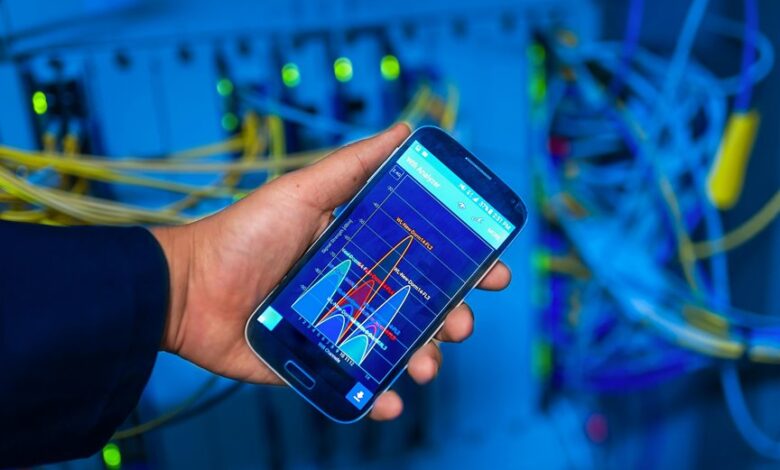
The internal network analysis of 192.168.40.1 reveals its essential function as a gateway within local area networks. This IP address plays a crucial role in facilitating efficient communication among devices. Its ability to manage data packets significantly reduces latency. However, understanding the importance of activity feedback in network performance remains critical. Examining this feedback can uncover underlying issues and drive better resource allocation strategies. What challenges and opportunities might this analysis present?
Understanding the Role of 192.168.40.1 in Local Networks
The IP address 192.168.40.1 serves as a critical component in the architecture of local area networks (LANs).
This address functions as a gateway, enabling devices within a local network to communicate effectively.


How 192.168.40.1 Facilitates Device Communication
Facilitating seamless communication between devices, 192.168.40.1 acts as a pivotal intermediary in local networks.
This IP address enhances device interconnectivity by managing data packets, ensuring efficient routing between multiple devices.
By optimizing communication paths, 192.168.40.1 significantly contributes to network efficiency, allowing for faster data transfer and reduced latency.
Consequently, it fosters an environment conducive to collaborative and autonomous device interactions.
Importance of Activity Feedback in Network Management
Activity feedback serves as a crucial element in the realm of network management, enabling administrators to assess performance, troubleshoot issues, and make informed decisions.
By analyzing activity feedback, network managers can identify trends in network performance and user engagement, thus optimizing resources effectively.
This proactive approach ensures a responsive and adaptable network environment, ultimately enhancing user satisfaction and operational efficiency.
Troubleshooting Common Issues With 192.168.40.1
Numerous users may encounter issues when attempting to access devices or interfaces associated with the IP address 192.168.40.1, a common gateway for many home and office routers.
Common problems include IP conflicts, which can result in connection drops, preventing reliable access.
Effective troubleshooting involves checking for duplicate IP addresses, ensuring stable connections, and resetting network devices to restore functionality and access.
Conclusion
In the grand tapestry of digital connectivity, 192.168.40.1 stands as the unassuming sentinel, tirelessly managing data flows while remaining unnoticed by users oblivious to its crucial contributions. Ironically, as it orchestrates seamless communications and mitigates latency, the very devices it serves often take its existence for granted. Without this gateway’s diligent oversight, the network would unravel, revealing a chaotic cacophony of disconnected devices, highlighting the paradox of reliance on an entity that remains but a shadow in the background.